

The Amazing Doctor Who Saved Lives with Blood Banks
Imagine This: A Life-Saving Discovery
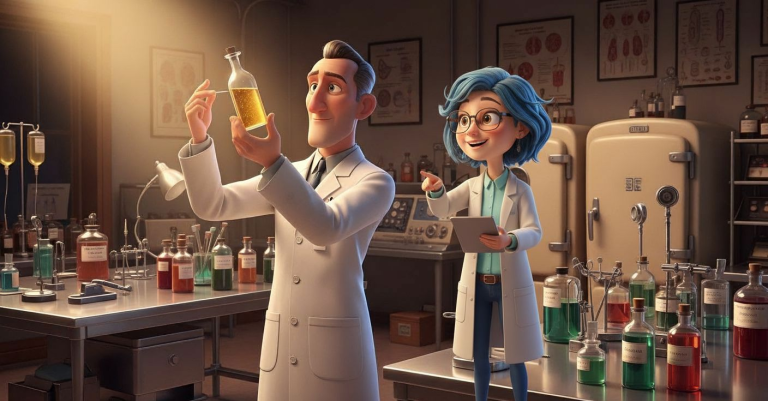
Picture a cold winter night in 1940. Snow is falling on New York City, and inside a bright hospital, a doctor in a white coat carefully lifts a glass bottle filled with golden liquid. This isn’t just any liquid – it’s plasma, the clear part of blood that could save thousands of lives! The doctor’s name is Charles Drew, and he’s about to change medicine forever. While bombs are falling on London and people desperately need help, Charles is working on something incredible: a way to save blood safely so it can travel across oceans to help wounded people.
Meet Charles Drew: The Boy Who Loved to Run
Long before Charles became a famous doctor, he was just a regular kid growing up in Washington, D.C. He absolutely loved to run! On hot summer days, you could see him racing down the streets, his sneakers pounding on the dirt roads. Charles was amazing at sports – he could run faster than almost anyone, and he was a star football player too. Crowds would cheer when they saw his long strides on the track!
But Charles wasn’t just fast with his feet – he was fast with his brain too! At home, his family always emphasized how important school was. Books sat right next to his polished shoes, and Charles kept everything neat and organized. Even as a young boy, he loved solving puzzles and figuring out how things worked.
Fun Fact!
Charles was so good at sports that he became a star athlete at Amherst College! He ran track and played football, but he was already dreaming about something bigger – he wanted to become a doctor and help people with both his hands and his brilliant mind.
The Journey to Becoming a Doctor
After college, Charles faced a big problem. He wanted to go to medical school, but it was very expensive, and back then, it was much harder for Black students to get into good schools. But did Charles give up? No way! He had a plan that required patience and hard work.
Charles became a biology teacher at a college in Maryland. Picture him in a classroom that smelled like chalk and warm paper, teaching students about how the human body works. Around his neck hung a whistle – because he also coached the track team! Every day after teaching, he would train young athletes, just like someone had trained him. And every night, he would save money, dollar by dollar, for his dream of medical school.
Did You Know?
Charles kept his focus like a runner staying in their lane on a track. He told his students that “steady work builds strength,” and he followed his own advice every single day!
Medical School in the Snowy City
Finally, Charles’s big chance came! He traveled north to Montreal, Canada, where snow crunched under his shoes and radiators hissed in the cold dorm rooms. At McGill University, he studied to become a surgeon. The hospital was bright and clean, and Charles learned how to help people with his gentle, careful hands.
But something really important happened during these cold Canadian winters. Charles noticed how many people were hurt badly and lost a lot of blood. He started thinking: What if we could save blood safely so it would be ready when people really needed it?
This was a huge problem back then! Blood would spoil quickly, or it would get thick and clumpy. Charles kept this problem close to his heart, like carrying a special treasure. He didn’t know it yet, but this idea would later save thousands and thousands of lives!
Life Back Then
In the 1930s, hospitals didn’t have the amazing blood banks we have today. If someone needed blood during an operation, doctors had to find a donor right away – usually a family member or friend who would give blood on the spot! This made surgery much more dangerous and limited.
The Big Discovery in New York
Charles moved to New York City to continue his medical training. In a research lab that smelled like glass and clean metal, he worked day and night trying to solve the blood storage problem. At first, nothing worked right. Some samples spoiled too quickly. Some labels got smeared. It was frustrating!
But then – EUREKA! – Charles made an amazing discovery. He found out that plasma, the clear yellow liquid part of blood, could be stored much longer than whole blood! Plasma could travel farther without spoiling and could help people just as well in emergencies. It was like finding the key to a treasure chest!
Charles spent months and months testing different ways to keep plasma safe. He tried different temperatures, different bottles, and different chemicals to prevent clotting. He wrote down every single detail in careful notes. His work wasn’t flashy or exciting to watch, but it was incredibly important. He was building a system that hospitals could trust, even in the scariest emergencies.
Science Made Simple
Think of blood like a fruit smoothie! The red blood cells are like the chunky fruit pieces that carry oxygen around your body. The plasma is like the liquid part that carries all the other important stuff your body needs. Charles figured out that this “liquid part” was much easier to store and ship safely!
When War Called for Help
In 1940, something terrible was happening in London, England. German planes were dropping bombs on the city, and many people were getting hurt. British hospitals desperately needed blood plasma to save lives, but they were thousands of miles away from America!
The phone rang in Charles’s lab. Britain needed help – fast! This was the moment when all of Charles’s careful research would be put to the ultimate test. He helped create something called “Blood for Britain,” a program to send plasma across the dangerous Atlantic Ocean.
Picture this: donor centers opened up all over New York. Nurses learned Charles’s special methods. Wooden crates filled with glass bottles arrived by the hundreds. Telephones buzzed all day long. Charles stayed calm in all the excitement because he knew that following the same careful steps every time would save the most lives.
Incredible Impact!
Charles’s “Blood for Britain” program sent thousands of plasma bottles across the ocean! Ships and planes carried these life-saving supplies to London hospitals. Reports came back saying that Charles’s plasma was helping save many wounded people. What started in one small lab was now helping people thousands of miles away!
Building Blood Banks Across America
The American Red Cross heard about Charles’s amazing work and asked for his help with an even bigger project. They needed to collect blood for American soldiers who were fighting in World War II. This meant creating a system that would work in every state, from big cities to small towns!
Charles designed mobile blood collection units – basically big trucks filled with all the equipment needed to collect and store blood safely. These trucks would roll up to factories, schools, and community centers. People would line up to donate blood to help the soldiers. Charles made sure every single step was done exactly the same way, whether you were in New York or California!
The system grew and grew, stretching across thousands of miles. It required incredible organization – like conducting a giant orchestra where every musician had to play their part perfectly.
How Blood Donation Worked
Imagine a big truck parked outside your school! Inside, there would be comfortable chairs, clean equipment, and friendly nurses. People would roll up their sleeves, and in just a few minutes, they could give blood that might save a soldier’s life on the other side of the world. Pretty amazing, right?
Standing Up for What’s Right
But then something very unfair happened. Some government officials made a rule that blood from Black donors and white donors had to be kept separate. This made Charles really upset because he knew it was wrong. Science had already proven that blood types (like A, B, and O) were what mattered for transfusions, not the color of someone’s skin!
Charles was brave and spoke out against this unfair rule. He wrote letters and gave speeches explaining why the policy was both scientifically wrong and morally wrong. He kept working for a while because he knew people’s lives were at stake, but in 1941, he decided he couldn’t support such an unfair system anymore.
So Charles made a difficult choice. He left his important job with the Red Cross and returned to Howard University in Washington, D.C., where he could teach young doctors and continue saying what he believed was true.
Standing Strong
It took real courage for Charles to speak up against unfair rules, especially when important people disagreed with him. But he knew that true science doesn’t care about skin color – it only cares about facts and helping people!
Teaching the Next Generation
At Howard University and Freedmen’s Hospital, Charles became a teacher and surgeon. The operating room was his classroom, bright and calm, with instruments clinking softly in metal trays. He taught young doctors not just how to operate, but how to prepare carefully, focus completely, and always care about their patients.
Charles set very high standards, but he explained everything with incredible patience. His students could feel his steady kindness. He wasn’t just building their surgical skills – he was building their confidence too! Many of these students went on to become excellent doctors themselves, carrying Charles’s lessons to hospitals all across America.
Beyond the hospital, Charles served on important national medical committees. Other doctors and scientists listened carefully when he spoke because they knew his work was always excellent and trustworthy.
Fun Teacher Facts!
- Charles kept his shoes perfectly polished and his schedule super organized – he liked everything neat and tidy!
- He told stories at the dinner table but was an even better listener
- Students said he never rushed when explaining difficult medical concepts
- He could make even the most complicated surgery seem manageable with his calm, step-by-step approach
Recognition and Honors
In 1944, Charles received the Spingarn Medal from the NAACP – one of the highest honors given to African Americans for outstanding achievement. When he accepted the medal, Charles was characteristically humble. He knew the medal represented not just his work, but the work of countless nurses, donors, lab technicians, and students who had helped make blood banking successful.
A photograph from that day shows Charles with a calm, gentle smile. But right after the ceremony, what did he do? He went back to work! There were more patients to help, more students to teach, and more lives to save.
Charles traveled all over the country giving speeches at medical schools and hospitals. He would step off trains with his simple suitcase and explain blood banking in words that everyone could understand. He showed doctors how checklists could protect patients and explained that fairness wasn’t just morally right – it was also scientifically necessary for the best medical care.
Did You Know?
Charles was such a good speaker that medical students would pack lecture halls to hear him! He had a special talent for making complex medical ideas clear and interesting. Teachers and students alike took careful notes when he spoke.
A Tragic End to a Great Life
On April 1, 1950, Charles was driving through North Carolina at night when his car crashed. He was rushed to a hospital where doctors worked desperately to save him, but his injuries were too severe. At only 45 years old, this amazing doctor who had saved so many lives was gone.
A sad rumor spread later that Charles had died because he was denied a blood transfusion due to his race. But historians have carefully researched this and confirmed it’s not true. Charles did receive medical care – the crash injuries were simply too serious for even the best doctors to overcome.
His friends, family, and students mourned the loss of this gentle giant of medicine. But they also knew that his work would continue saving lives for generations to come.
Charles Drew’s Legacy Lives On
Even after Charles’s death, his ideas stayed very much alive in hospitals everywhere. The careful methods he developed – clear labels, proper refrigeration, standardized procedures – became the foundation for modern blood banking.
And here’s something wonderful: by 1950, the American Red Cross finally ended the unfair rule about separating blood by race. Science and fairness grew closer together, just as Charles had always believed they should.
Charles’s students became leaders in medicine, and they remembered his calm hands and careful notes. They passed these good habits on to their own students, creating a ripple effect that continues to this day.
Amazing Legacy Facts!
- Charles’s blood banking methods are still used in hospitals around the world today!
- Modern blood centers process millions of donations each year using principles he helped establish
- The American Red Cross now collects about 6.8 million blood donations annually
- Every two seconds, someone in America needs blood products – and Charles’s systems help make sure it’s available!
Blood Banking Today
Walk into any modern blood center today, and you’ll see Charles Drew’s influence everywhere! Centrifuges spin samples at incredible speeds. Label printers create perfect tags for every bag. Refrigerators keep everything at exactly the right temperature. Workers check blood types with amazing precision.
Plasma, platelets, and red blood cells each follow their own special pathway – but they all depend on the same careful, standardized methods that Charles pioneered. Delivery vans carry these life-saving products many miles to hospitals, just like those early shipments to Britain.
The chain from donor to patient is now much longer and more complex than in Charles’s time, but it’s also much stronger. Every link depends on clear steps, careful records, and shared standards – the very principles Charles built into the system decades ago.
Modern Miracles
Today’s blood products can help people in ways Charles could barely imagine! Plasma helps burn victims. Platelets help cancer patients. Red blood cells help people with sickle cell disease. And it all started with one doctor’s careful observations in a cold lab in Montreal!
A Life-Saving Moment
Picture this scene happening right now in a hospital somewhere: A child arrives with pale lips and weak legs. Nurses move with smooth, practiced steps. A doctor quickly orders blood products. A clear bag hangs on a metal pole, and a drip begins. The room grows quiet and hopeful as everyone watches the child slowly get better.
This moment connects dozens of people: blood donors, truck drivers, lab workers, nurses, and doctors. But it also connects to Charles Drew, whose careful methods make it possible for all these people to work together seamlessly. His systems reach into quiet hospital rooms like this one every single day.
What We Can Learn from Charles Drew
Charles Drew’s story teaches us so many important lessons! He showed us that:
- Steady work builds strength – Charles saved money dollar by dollar and studied step by step to achieve his dreams
- Fairness makes everything stronger – His fight against segregated blood proved that doing the right thing also leads to better science
- Small, careful steps can change the world – Every clean bottle and clear label Charles insisted on saved lives
- Teaching others multiplies your impact – Charles’s students carried his methods to hospitals everywhere
- You can stay calm under pressure – Even when bombs were falling and people desperately needed help, Charles remained focused and methodical
Think About This
Charles faced unfair barriers because of his race, but he never let anger or frustration stop him from helping people. Instead, he used his incredible skills and patient determination to prove that excellence speaks louder than prejudice. What challenges in your life could you tackle with Charles’s steady, determined approach?
History Is All Around Us!
The next time you see a Red Cross blood drive or hear about someone donating blood, remember Charles Drew! When you visit a hospital and see all the careful procedures and safety checks, think about the young man who loved to run and became a doctor who saved countless lives.
Charles’s story shows us that heroes don’t always wear capes or fight dramatic battles. Sometimes the biggest heroes are people who work quietly and carefully to solve important problems. They use their minds, their skills, and their determination to make the world safer for everyone.
Charles Drew proves that one person’s dedication to doing things right can create systems that help people for generations. His work keeps beating in thousands of quiet hospital rooms around the world, where patients get better because someone long ago cared enough to make blood banking safe and reliable.
Every time a life is saved with donated blood, Charles Drew’s legacy lives on. And that’s pretty amazing, don’t you think?


